How Reducing Waste at Sea “Greener Galleys” Can Inspire Land-Based Kitchens to Go Sustainable
By Uwe Stiefel
Corporate Executive Chef | Culinary & Procurement Strategist | Hospitality Professional
Sustainability in hospitality is no longer a nice-to-have; it’s a strategic imperative and vital to run operations effectively and efficiently and preserving future travel. Having spent over three decades leading culinary operations at sea – from the prestigious liners of Cunard, a luxury Italian river cruise ship, to several of Princess Cruises’ premium ships and finally to the fleet of P&O Cruises Australia – I’ve come to appreciate the unique opportunities and pressures that maritime environments place on kitchen management. When you’re at sea, there is no Plan B. Waste, inefficiency and excess are simply no options.
That matrix has taught me valuable lessons that I believe land-based kitchens can learn from and apply to drive sustainability, efficiency and profitability.
From Ocean to Outback: A Tale of Two Kitchens
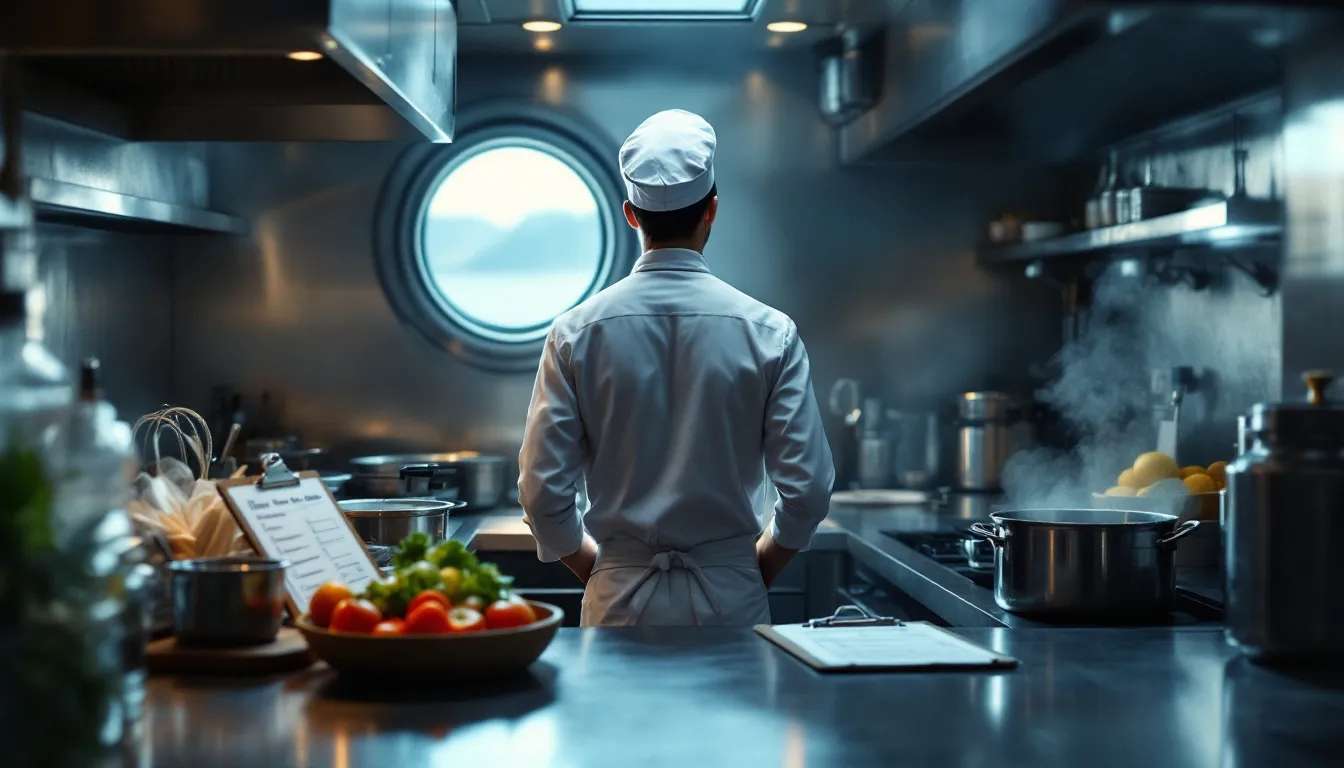
Operating at Sea: Kitchens (or galleys) onboard cruise ships serve thousands of meals daily, with limited storage and zero room for error. Provisioning and menus are planned months in advance, accounting for global port schedules, a variety of regulations, refrigeration and storage constraints. Every item must be maximized and used purposefully.
Operating on Land: Restaurants in Australia enjoy greater access to suppliers and abundance of great produce, more flexibility in menu changes and storage space. Yet, this comfort can lead to over-ordering, food waste and underutilized inventory, if not monitored properly.
Fact: Globally, up to 20% of food in commercial, retail and household kitchens is going to waste, equating to around 1.05 billion tons annually. This not only comes at a material cost and an environmental impact, but all food needs to be produced and prepared first. On the ships, we’ve managed to make significant improvements in reducing food waste generation significantly to really low numbers, using predictive systems, effective planning and a smart waste avoiding approach.
Waste Isn’t Just About Leftovers – It’s About Mindset
At sea, waste is a logistical challenge. Disposal affects environmental scores and operational costs. Daily food waste audits and monitoring are one way of staying on top of it.
Land Tip: Adopt daily waste tracking systems. Encourage the team to be part of the journey and elaborate on the importance to preventing food waste on the first place, for example through initiatives such as “Taste don’t Waste”.
Sustainability Starts with Smart Procurement
Smart procurement, the right products and specifications and effective communication with the locally based Supply Chain team led to collaborating with vendors, manufacturers and producers for sustainable and responsible sourcing. A ship that docks every 3, 4, 7 or 10 days doesn’t have the luxury of running out or overstocking.
Land Tip: Build longer-term relationships with local Australian suppliers. Prioritize products that can be used nose-to-tail or root-to-leaf, maximizing outcomes, food cost savings and food waste prevention.
Tech-Enabled Kitchens Drive Change
Food waste technology, smart monitoring systems and inventory tools, for example, are aiding to reduce per-passenger accumulated food waste. Predictive analytics helped eliminate over-ordering or over-production, which in turn prevented waste before it happened.
Land Tip: Even a basic spreadsheet can start the journey. Track top 5 most wasted items per week and adjust ordering accordingly. Later, scale up to platforms that track spoilage, plate and prep waste in real time.
Menu Engineering for Minimal Waste
Approaching menu engineering based on itineraries and voyage length, crew and guest numbers and demographics, seasons, venue and menu uptake and identifying popular dishes help to reduce waste and to optimize food production and service. A kitchen without waste is a kitchen with vision.
Land Tip: Design dishes that cross-utilize ingredients without being repetitive. Add seasonal inserts to promote locally sourced produce. Highlight these initiatives in the menu – guests do appreciate the story.
Culture is Key: Empower the Crew
Training and floor presence was daily at sea. Sustainability goals are part of an individual’s and team’s performance evaluation outcomes. The mission was a consolidated team effort, where everyone played a part in creating a greener galley.
Land Tip: Sustainability starts with pre-shift briefings. Create small competitions around portion control, waste reduction and clean-down time. A weekly “zero bin” take-on could bring fantastic results.
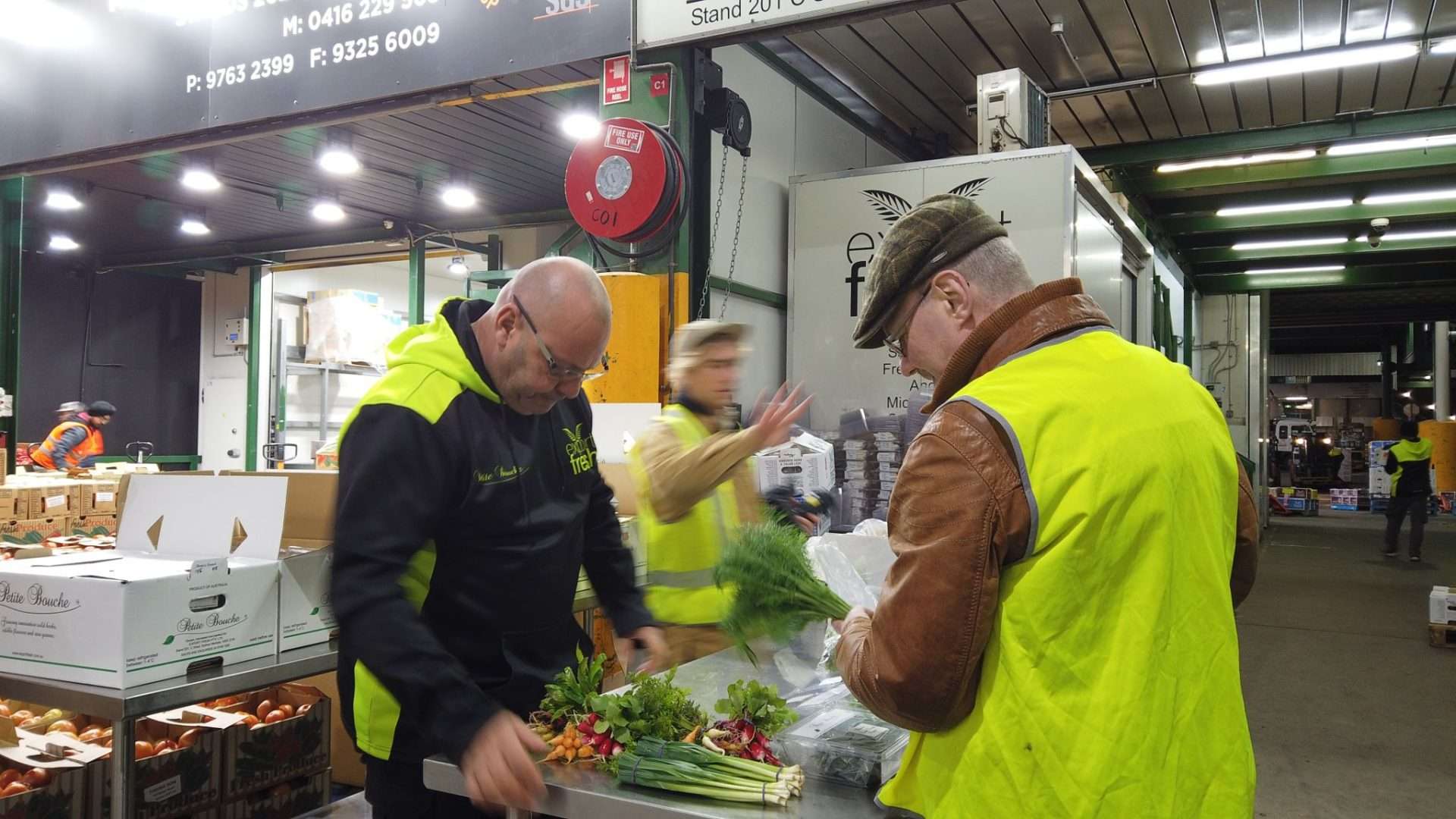
Questions We Asked Uwe for This Feature:
What was the biggest sustainability challenge you faced on a cruise ship?
– Once a ship is at sea then there are only so many resources at hand to ensure that all boxes are ticked and the voyage, the service for guests and crew, the destinations and the care for each other and the environment are becoming part of the larger picture, responsibility and sustainability. It’s a team effort, really, and everyone plays a role in that picture. There is only one ocean and one planet, after all.
How do procurement decisions at sea differ from those on land?
– Once a ship has left port and is at sea all required products and goods must be onboard to suffice for the voyage, plus a certain percentage of back-up, including food, beverages and hotel (things such as crockery, glassware, cutlery, stationary, paper, linen, chemicals, kitchen & restaurant equipment, table and accommodation linen and so much more) as enroute purchases are rare if possible at all, due to volume, cost, availability, specifications and logistics. Therefore, meticulous planning is key for all loadings in the turnaround ports, when a voyage starts and a voyage ends.
Can you share a story about a time you turned a major waste problem into a win?
– Nearly 10 years ago, we’ve turned in a combined team effort and some extensive work a large-scale onboard casual food venue from a self-service outlet to a food court-style service outlet, not only increasing with it the selection and variety of food served but also reducing food waste exponentially, increasing food safety and food hygiene parameters at the same time.
What equipment do you believe every land-based kitchen should invest in?
– There are quite a few options for food waste processing equipment available on the market, but an end solution will all come down to the size of the operation, financial and technical abilities and actual requirements.
How do you motivate teams to embrace sustainability?
– Environmental and sustainability responsibilities are a given and to embrace them is part of the day—to-day routines, every step of the way and not only a vital key element in a combined team effort but even more so it is reflected in the actions and approaches taken by every individual. See something say something, making sure that everyone does the right thing.
Are there any ingredients you treat differently at sea to minimize waste?
– Yes, one of the key food item groups to really look well after would be fresh produce, namely anything perishable, as products are loaded to last at least a few days, if not up to two or three weeks. My take on it was called “fresh produce gardening” and involved the store’s team and the culinary team to visit the fresh produce rooms daily to make sure that no spoilage or wastage is occurring, and all fresh produce are used to their full extend.
What advice would you give to a Head Chef in Sydney looking to reduce their kitchen’s footprint?
– There are a couple of simple yet well achievable takes – responsible food sourcing, responsible food storage and responsible food preparation, preventing unnecessary wastage. It’s a team effort rather than a one-person-show.
How do you build supplier relationships that support your sustainability goals?
– Core driver would be to establish, maintain and further a professional mutual relationship which highlights the business sustainability goals and allows in teamwork not only to reach them but also to exceed them.
What tech tools made the biggest impact during your time at sea?
– Having worked at sea and on cruise ships for well over three decades, technology, equipment and tools have of course changed vastly, having gotten naturally and positively a lot more sophisticated, advanced and efficient over time and having adapted along the way to the changing and so much more stringent compliance and regulations, as required.
What does the kitchen of the future look like to you—both on land and at sea?
– A century ago, kitchens were practical places of labour rather than celebration and socializing, essentially hidden away. Fast forward, the future probably will see high-technology and intelligent environments, such as AI-driven recipe databases, smart fridges capturing food availability and expiration dates and flexible countertops with surfaces doubling as preparation spaces, weighing devices and cooking areas, making sustainability an essential part of kitchen and galley designs.
Final Thoughts
Australia’s hospitality sector is poised for a green transformation. With rising costs, conscious consumers and environmental regulation all converging, it’s time to rethink the way kitchens are being run.
If it can be done in the middle of the ocean, with limited space and zero margin for error, imagine what’s possible on land.
The shift can be made together – one plate, one policy and one passionate team at a time.
Interested in connecting or collaborating on sustainable kitchen solutions? Reach out via LinkedIn or through All4Chefs.